Originally published on Elroy’s Substack.
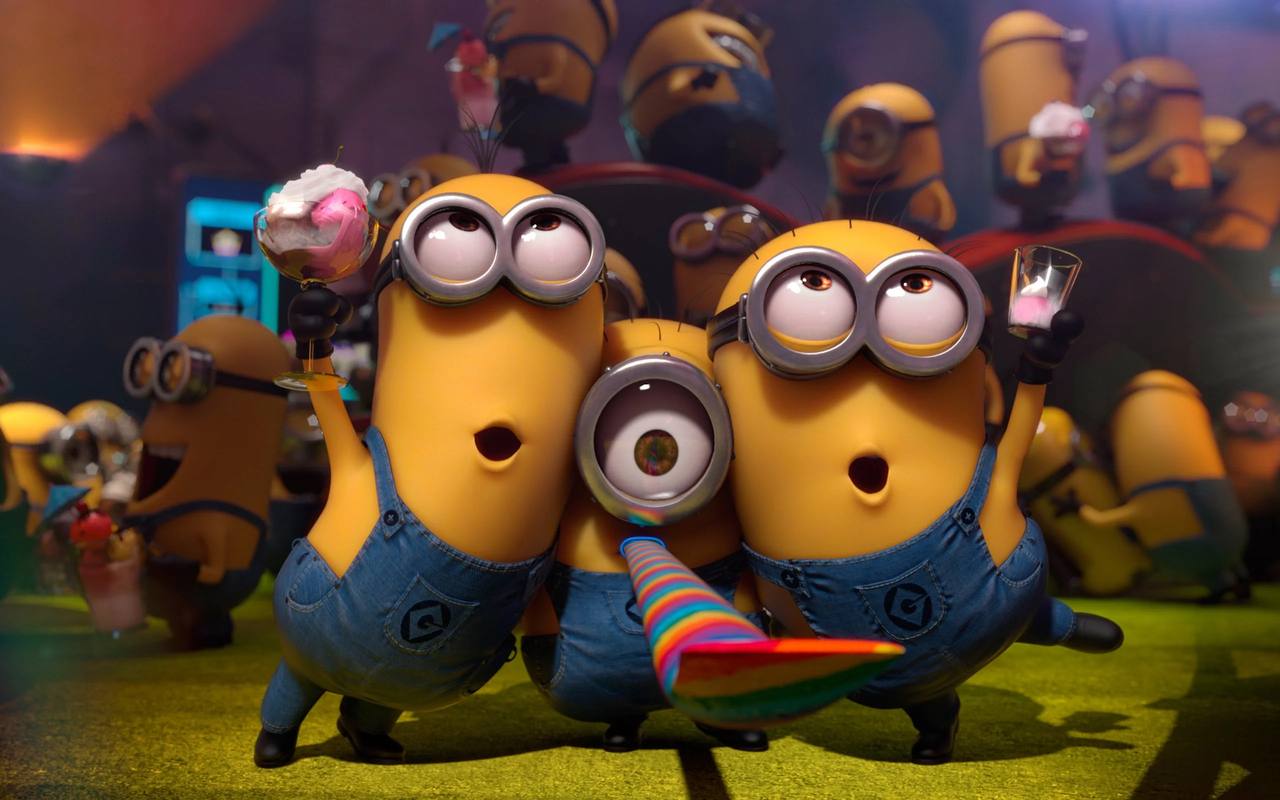
The Minion is a masterclass in Aesthetic Ridiculousness. These yellow, pill-shaped henchmen have transitioned from mere sidekicks to global icons, their ubiquity is a testament to a specific psychological niche they fill. By stripping away the weight of human consequence and replacing it with gibberish and overalls, the Minions offer us something we secretly crave: a holiday from logic and a permit for low stakes villainy.
The Geometry of the Inane#
The visual appeal of a Minion is in it’s simplification. Lacking a neck, waist, or any form of human anatomy, they are essentially blank slates for slapstick. Their design relies heavily on the Kindchenschema: large eyes, round bodies, and high-pitched voices and this triggers an evolutionary nurturing response in humans.
However, the Minion subverts this “cuteness” by being perpetually chaotic. They exist in a state of Aesthetic Ridiculousness, where their goggles and denim uniforms suggest a worker status that their actual behaviour constantly undermines.
The Linguistic Tabula Rasa#
A vital component of the Minion’s desirability is Minionese. By blending Spanish, Italian, Chinese, Tagalog, French and other languages, the Minions bypass the barriers of literal language. Because we cannot understand their specific words, we are forced to interpret their intent through pure emotion and physical comedy. This turns the Minion into a globally accessible connection because they represent the inner child that exists before the structure of formal language takes hold.
The Appeal of Low-Stakes Villainy#
The most compelling aspect of the Minion is their relationship with evil. Minions actively seek out the most despicable master, yet they are fundamentally incapable of true malice. Their villainy is performed with the clumsiness of a puppy. This allows the audience to indulge in naughty behaviour without any moral weight.
In Despicable Me (2010), the plot to steal the moon provides absolutely no practical benefit. It is theatrically absurd. Their goal isn’t world domination in a cruel sense. It is the pursuit of the ultimate prank. When a goal is that outlandish, the moral weight evaporates. You aren’t rooting for a thief; you’re rooting for a group of minions trying to steal The Queen’s crown. The absurdity of the crime acts as a moral shock absorber, allowing us to laugh because they are decoupled from “wrong” things.
Functional Immortality and Optimism#
Further contributing to this lack of stakes is the Minions’ functional immortality. Throughout the franchise, Minions are flattened, frozen, blown up, and shot into space, only to pop back into their original shape with a giggle.
The Physics of the Absurd: If a character cannot be hurt, the audience is freed from empathy based anxiety. We don’t feel bad when a Minion falls into a meat grinder because we know they will emerge as links of yellow sausages and pop back to normal. This immortality fuels their eternal optimism; they cannot be defeated because they don’t understand the concept of losing.
The Mirror of Modernity#
Underneath the banana jokes, Minions act as a subtle satire of the modern world. They are the ultimate corporate drones, working in vast underground complexes and following leaders blindly. Yet, they find profound joy in the smallest, most mundane distractions — a light switch, a photocopier, or a fire hydrant.
By laughing at them, we are subtly laughing at our own tendency to find meaning in repetitive, often absurd, daily tasks. They represent a liberation from the seriousness of work. They are the workers who have replaced the pursuit of a paycheck with the pursuit of a laugh.
Conclusion: The Desirability of the Absurd#
We desire the Minion because they represent a world where failure is funny, villainy is a game, and the consequences dissolve into nihilistic comedy. They offer a temporary escape from a world that demands we be competent, moral, and articulate. In their yellow, gibberish-filled lives, we find the Desirability of the Absurd a reminder that sometimes, the most logical thing to do is to be completely ridiculous.